

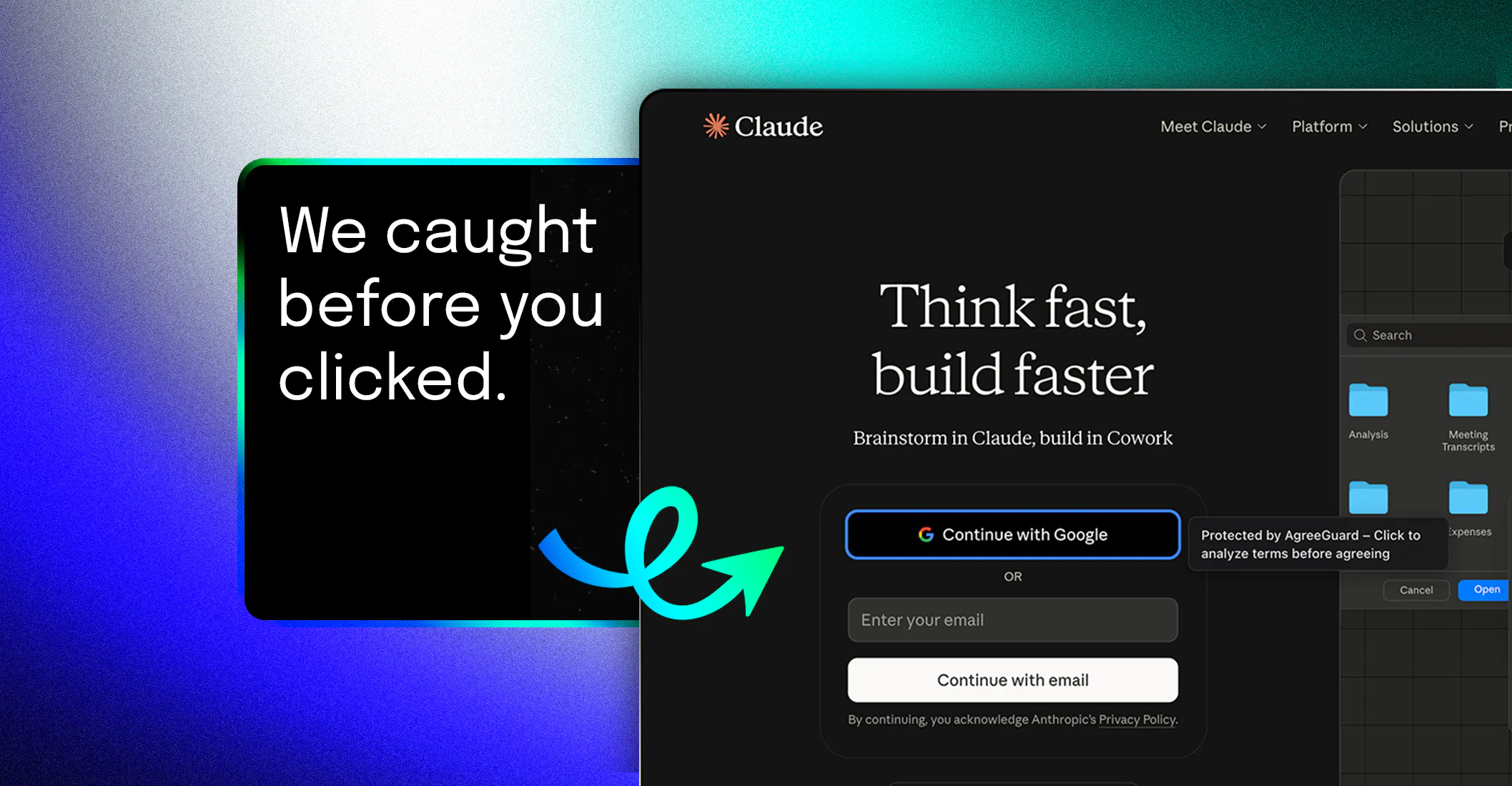
About AgreeGuard
Reviews 5
-
Garnet Stokes 7 months ago
How accurate is the AI analysis? Legal language is notoriously nuanced, and a missed clause could give users a false sense of security.
-
Hazel Altenwerth 8 months ago
Does it flag things like forced arbitration clauses or just the more obvious red flags like data selling? Congrats on the launch!
-
Conner Gislason 8 months ago
Highlighting data selling and hidden fees in plain English is exactly the kind of transparency most companies hope you'll skip past. The "red flags" framing is smart because it filters for what actually matters instead of summarizing the whole document. Does it work retroactively on services you've already agreed to? Would be interesting to run it against apps you're already paying for and see what you actually signed up for.
-
Gaylord Buckridge 8 months ago
How does AgreeGuard handle the nuance and variability across different legal documents and jurisdictions when summarizing terms and conditions? For example, can it distinguish between genuinely critical clauses and more standard boilerplate, and how reliable are the “red flags” in avoiding false positives or missing subtle risks? Also curious if you’re planning features like historical comparisons (e.g. when terms change over time) or personalization based on user preferences (privacy-focused vs convenience-focused users).
-
Demetrius Gulgowski 8 months ago
I have clicked "I Agree" thousands of times without reading a single line. The idea of getting a 15-second summary with red flags sounds almost too convenient. How accurate is it with longer or more complex terms — does it catch the subtle stuff buried deep in the text, or mostly the obvious patterns?