

About Airuncode
Reviews 3
-
Hillard Halvorson 1 month ago
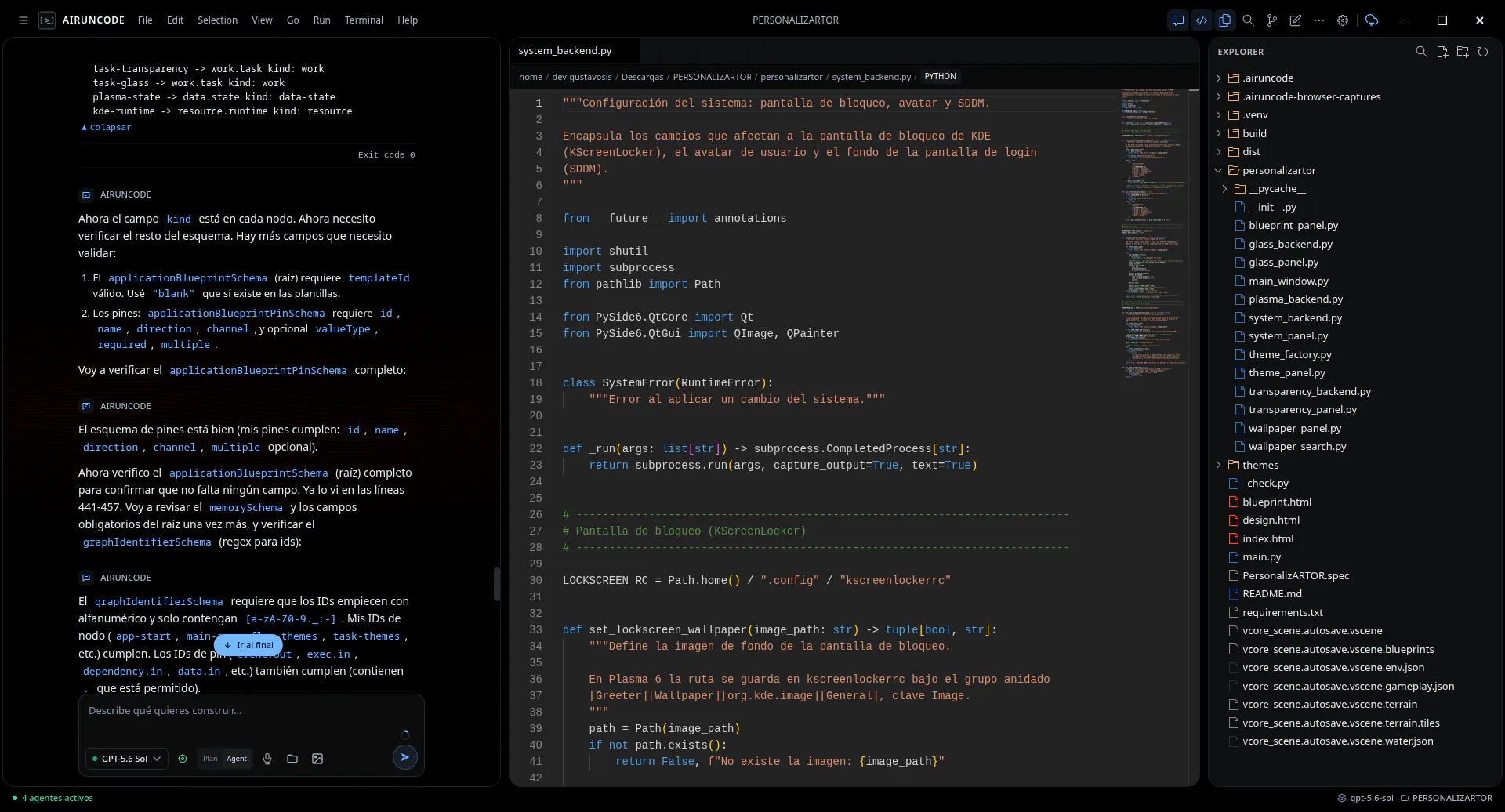
I'm Gustavo, the developer of AIRUNCODE. I've been building a desktop AI coding environment around a question that keeps bothering me: Why does changing the AI model often mean changing the entire development workflow? You use Claude for architecture, Codex for implementation, maybe OpenRouter for cheaper models, and Ollama when local inference makes sense. Each model has its strengths. But your project doesn't suddenly become a different project because you switched providers. That's why I'm building AIRUNCODE. The idea is simple: the workspace stays, the models compete. AIRUNCODE brings together: - Multiple AI providers, including supported subscription integrations, APIs, OpenRouter and Ollama. - Reusable project knowledge through a knowledge graph. - Git, branches, pull requests and code review. - Cloudflare deployment workflows. - Remote access to your desktop development sessions. I'm not trying to build another AI model. I'm building the environment around the models, so developers can choose the intelligence they need without rebuilding their workflow every time. And building that environment has meant working on everything around the product too. Recently, I fixed an SEO issue affecting URL consistency across 72 pages of the AIRUNCODE website. Not exactly the glamorous side of AI development, but that's what turning software into a real product looks like. I'm looking for developers willing to try AIRUNCODE and give technical feedback. Especially if you're already paying for multiple coding AI tools and wondering why your workflow has to be scattered across all of them. Try AIRUNCODE: https://airuncode.com/ I'd genuinely like to know: If you could keep one thing consistent when switching between Claude, Codex and local models, what would it be? Project context? Tools? ConversatI'm Gustavo, the developer of AIRUNCODE. I've been building a desktop AI coding environment around a question that keeps bothering me: Why does changing the AI model often mean changing the entire development workflow? You use Claude for architecture, Codex for implementation, maybe OpenRouter for cheaper models, and Ollama when local inference makes sense. Each model has its strengths. But your project doesn't suddenly become a different project because you switched providers. That's why I'm building AIRUNCODE. The idea is simple: the workspace stays, the models compete. AIRUNCODE brings together: - Multiple AI providers, including supported subscription integrations, APIs, OpenRouter and Ollama. - Reusable project knowledge through a knowledge graph. - Git, branches, pull requests and code review. - Cloudflare deployment workflows. - Remote access to your desktop development sessions. I'm not trying to build another AI model. I'm building the environment around the models, so developers can choose the intelligence they need without rebuilding their workflow every time. And building that environment has meant working on everything around the product too. Recently, I fixed an SEO issue affecting URL consistency across 72 pages of the AIRUNCODE website. Not exactly the glamorous side of AI development, but that's what turning software into a real product looks like. I'm looking for developers willing to try AIRUNCODE and give technical feedback. Especially if you're already paying for multiple coding AI tools and wondering why your workflow has to be scattered across all of them. Try AIRUNCODE: https://airuncode.com/ I'd genuinely like to know: If you could keep one thing consistent when switching between Claude, Codex and local models, what would it be? Project context? Tools? Conversation history? Git workflow? Something else?ion history? Git workflow? Something else?
-
Al Wolf 2 months ago
Nice job on the launch! Can each agent in a parallel run use a different model at the same time, or do they all have to share one?
-
Constantin Leuschke 2 months ago
Several agents in parallel on the same repo is the part I'd want to hear more about. The failure I keep hitting isn't bad code, it's a second correct implementation of something the repo already had, because each session starts from a blank slate and it reads fine in the diff. Does the debate happen after all of them have read what's already there, or are they arguing about approaches before anyone checked whether one exists? Self-healing on a failed test worries me for the same reason, green doesn't tell you the fix belonged in that layer.