

About CodeBurn
Reviews 2
-
Mortimer Powlowski 3 months ago
the attribution thread in here is the most honest writeup of this problem I've seen, the "unattributed rather than smearing it somewhere plausible" choice especially. curious how this handles fan-out though. I run a lot of orchestration now where one task spins up 5-10 subagents in parallel, each burns its own tokens on its own slice, and only one final step merges their output into a PR. none of those side agents individually "did" the PR, the value only exists at the synthesis step. does codeburn have any concept of a parent task grouping child sessions, or does that show up as several expensive unattributed sessions and one cheap one that happens to touch the PR?
-
Ayden Miller 3 months ago
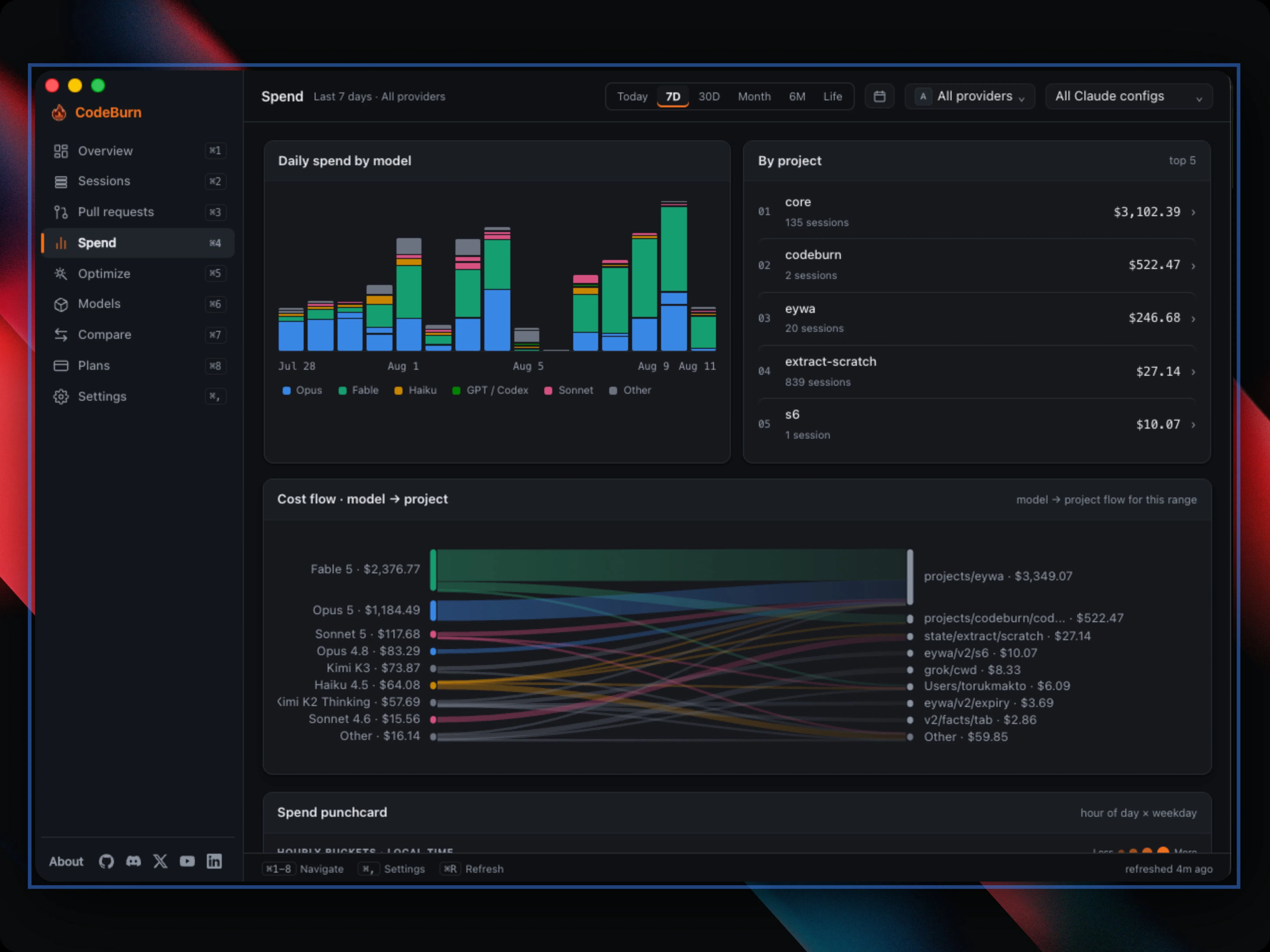
I came to CodeBurn from a somewhat unusual direction. I spent years in strategy and venture investing looking at companies deploying AI, and later moved into an operating role partly because I wanted to understand the problem from inside an enterprise. Then I started building with coding agents all day myself, and one thing became very obvious: provider dashboards are good at telling us what we consumed. They are much worse at telling us what the consumption actually accomplished. Resham had already been attacking that problem with CodeBurn. What immediately interested me was how much ground-truth information was sitting locally in agent sessions and git history. Which project used the money? What was the agent actually doing? How many times did it retry? What did it reread? Did any of that work become a commit or PR? That is the layer we're building out. The longer-term question we're particularly interested in is cost per useful unit of AI work, rather than cost per token. For this launch, I’d especially love feedback from people who use multiple coding agents heavily: What do you still feel blind to? What metric would actually make you change how you use your agents? I’ll be around here all day. Looking forward to your inputs.