

Enia Code
Proactive AI that refines code & learns your standards
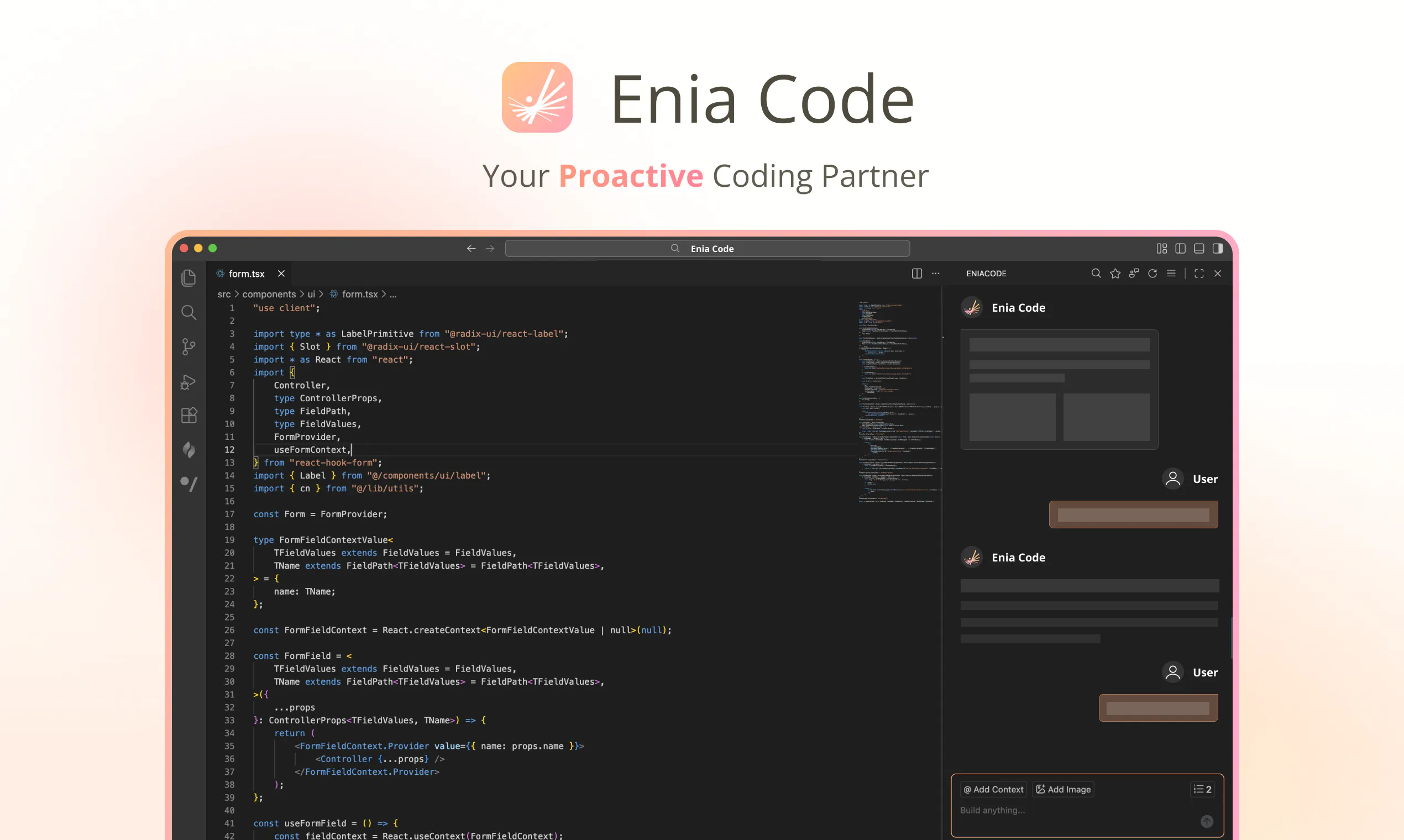
About Enia Code
Reviews 15
-
Kenneth Corwin 8 months ago
The proactive angle is what makes this interesting. Every other coding tool waits for you to ask. The shift from "reactive copilot" to "proactive agent that catches problems before you even think to look" is a genuinely different product category. The key question is: how does it learn what "your standards" actually are? Because every team thinks they have standards until an AI starts enforcing them and suddenly everyone disagrees about what counts. Does it learn from your existing codebase patterns, from explicit rules you set, or both? That learning loop is where the magic either happens or breaks down. Also curious about the false positive rate. A proactive tool that flags too many things becomes noise you ignore. That balance between "catch real issues" and "don't interrupt flow" is tough.
-
Mike VonRueden 8 months ago
This is the part nobody talks about with copilots - they only help when you already know what to ask. The bugs that kill you in production are the ones you never thought to check. If the persistent memory actually learns how my codebase works over time and catches patterns I miss, that's a different category of tool entirely.
-
Odell Bode 8 months ago
How does this differ from Google Jules?
-
Joany Hansen 8 months ago
Really cool idea! How do you handle token overuse with this model? How do you determine when to activate the analysis? I’m not asking just for fun) I have a travel startup and an idea to create a productive guide. But we ran into the issue that it could get quite expensive.
-
Mortimer Powlowski 8 months ago
@jessica_miller_7 As a developer, I find it a very interesting tool. Out of curiosity: how do you define your pricing strategy considering the dependency on AI engines?
-
Neal Jacobson 8 months ago
Congratulations on launching Enia Code!
-
Malachi Armstrong 8 months ago
Love the proactive approach! Most coding tools today are reactive — you ask, they answer. The idea of having an AI that continuously monitors and catches issues as you write is a game changer for maintaining code quality. Curious about how it learns team-specific standards over time — does it pick up on patterns from the codebase automatically, or does it need explicit configuration?
-
Marcus Macejkovic 8 months ago
As someone who works mostly alone on indie projects, code reviews basically don't exist for me 😅. So I either ship fast and accumulate tech debt, or slow down and overthink architecture. If Enia can act like a continuous lightweight code reviewer, that could be really useful. Wondering how intrusive the suggestions are though — does it interrupt the flow or stay subtle?
-
Lance Morar 8 months ago
I've been building side projects for a few years, mostly as a solo developer. One pattern I keep seeing is that I only realize architectural problems when the project becomes bigger. At that point it's already painful to refactor. The idea of an AI that proactively signals issues while you're coding is really interesting. Curious how deep the analysis goes — is it mostly file-level reasoning, or does it understand the broader project structure?
-
Joshua Abshire 8 months ago
This reminds me a bit of static analysis tools, but with AI reasoning layered on top. Traditional linters catch syntax or style issues, but they don't really help with deeper design problems. Interested to know what types of problems Enia is best at detecting.
-
Santa Cassin 8 months ago
Interesting concept. Most AI coding tools today are essentially prompt-response systems. You ask → it answers. A proactive model feels more like an actual collaborator. Curious how Enia decides when to surface a suggestion.
-
Derick Koelpin 8 months ago
Congrats on this launch!
-
Michel Heathcote 8 months ago
Really interesting “proactive AI” angle. How does Enia learn team coding standards over time without introducing style drift across repos?
-
Hobart Glover 8 months ago
Why should I use this over something like Claude Code or OpenClaw?
-
Marcelo Prohaska 8 months ago
A lot of devs hesitate to adopt agents because of trust, privacy, and cost predictability—what design choices did you make to ensure Enia doesn’t surprise users (unexpected edits, data handling, or runaway usage), and what tradeoffs did that force?