

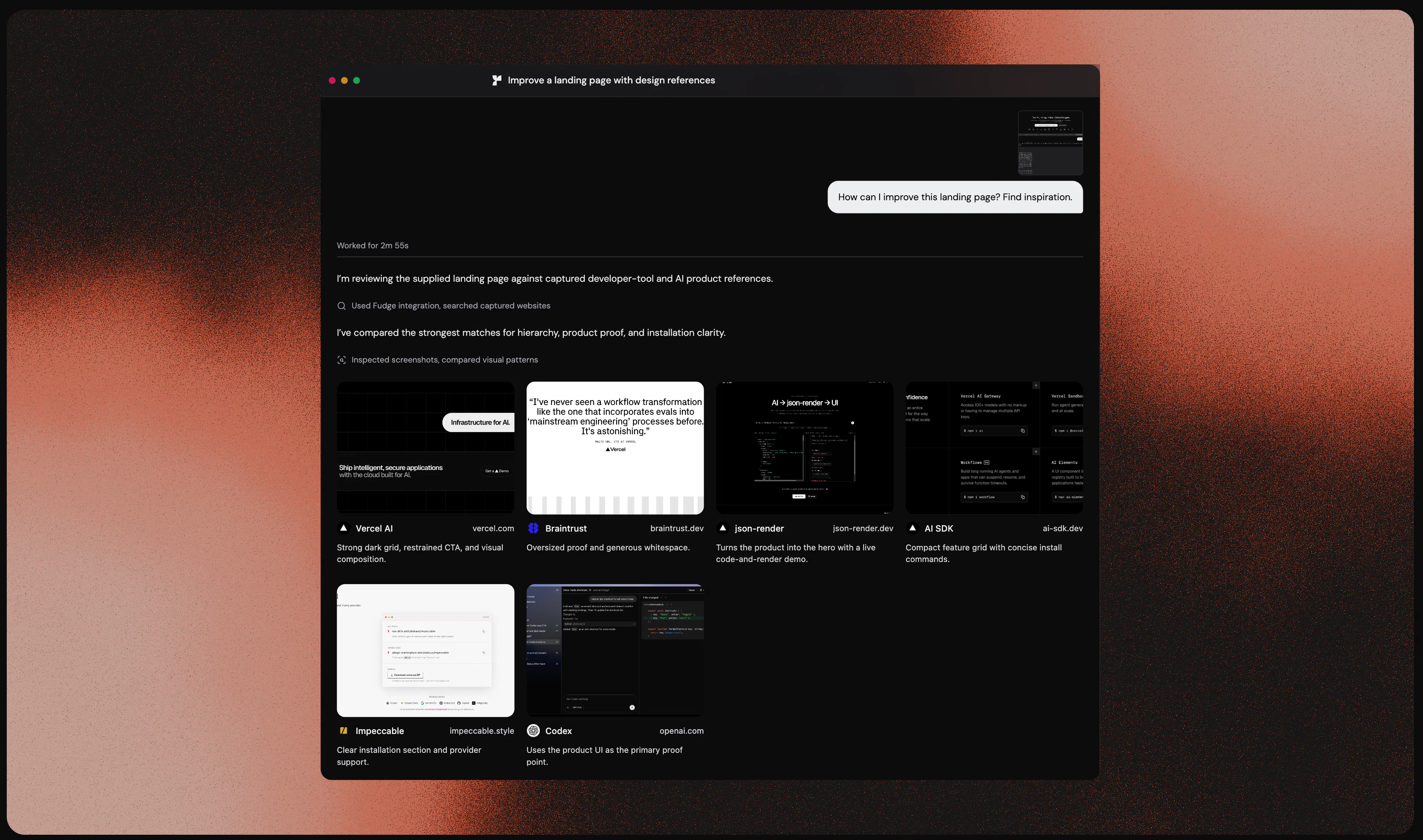
About Fudge MCP
Reviews 11
-
Ruben McClure 4 months ago
Simdi, things built in a hurry so often end up looking a bit samey, so leaning on sites that genuinely look good is a lovely idea. Taste is the hard part and this heads straight for it.
-
Orrin Batz 4 months ago
In case it comes across a similarly designed website for referencing purposes, will it take the risk of copying fonts and structures that may have copyrights or trademarks associated with the respective brand or does it restrict itself from using the styles altogether?
-
Haleigh Bartoletti 4 months ago
Congrats on launching, I really like the idea because the AI is scanning real websites and gives the recommended website interface. I'm just wondering what's the difference between Fudge and Lovable?
-
Rylan Cremin 4 months ago
@Simdi Jinkins that makes sense, thanks. so in practice most of the "taste" enforcement ends up living in the agent's prompt/instructions rather than the tool itself - fudge just gives it the raw material to draw from. good to know, I was picturing more of it baked into the extraction step.
-
Eino Klein 4 months ago
the part I'd want to be careful with is how close "measured design evidence" gets to a specific real company's actual brand identity versus generic patterns. pulling fonts/colors/layout from a category of sites as inspiration is fine, but if the agent leans hard on one particular close visual match, the output could end up looking like a clone of that specific brand rather than "good taste" in general. is there anything nudging toward blending multiple references instead of over-indexing on the single best match
-
Ruben McClure 4 months ago
"Better taste and not more adjectives" is painfully accurate. We spend a lot of time on moodboards for client design work, and we're actively integrating AI generation into that workflow right now — so searching real sites by fonts/components/layouts instead of prompting "cleaner, more premium" for the fifth time is exactly the missing piece. Definitely trying this one.
-
Scotty Feest 4 months ago
I like the concept of this, it definitely makes a big difference to agents having a solid design framework to work from.
-
Hillard Halvorson 4 months ago
Interesting idea. Using real design references instead of vague prompts makes a lot of sense
-
Hugh Borer 4 months ago
really like this framing of "taste" as something extractable rather than just scraping colors and fonts. what happens when the source site is inconsistent, like a company mid-rebrand where half the pages still use the old design system - does it pick up on the dominant pattern and ignore the outliers, or does it get confused and blend both into something that matches neither
-
Elmer Schoen 4 months ago
The bit I like is it hands the agent measured design evidence — actual fonts, colors, spacing — instead of another screenshot to eyeball, plus the Chrome extension to save references as I browse. My day-one workflow question: does that saved-reference library live locally with the MCP or sync to a Fudge account, and when I'm on one project can I point my agent at just my saved set instead of searching the full 10k every time?
-
Monserrate VonRueden 4 months ago
honestly love the idea of giving agents actual references instead of vibes, that part is really smart. one thing though, it would be super helpful if you could filter by industry or specific site categories, like only e-commerce or only SaaS landing pages, so the results are way more targeted when you're working on a particular project.