

Glia
Local-first AI memory bridge between browser chats and IDEs
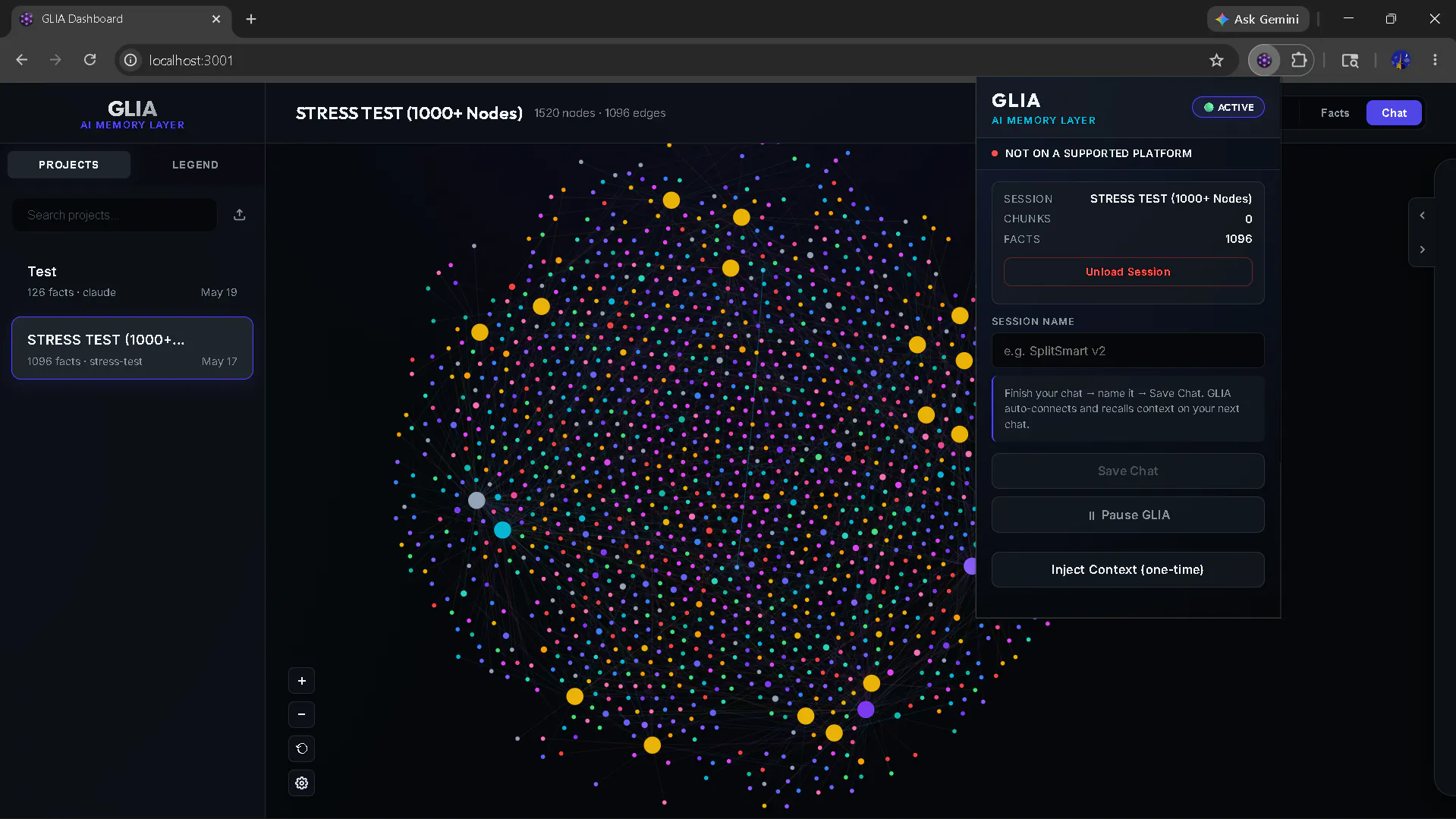
About Glia
Reviews 11
-
Enrico Wiza 5 months ago
The hard problem here really is not capture, it's truth. A useful next signal might be a lightweight "was this actually used?" loop that doesn't require full IDE telemetry. For example, let the MCP side observe which retrieved items were cited during an edit, survived into the final task summary, or were explicitly kept vs dismissed by the user. That still wouldn't prove correctness, but it would give you a practical reinforcement signal for separating real decisions from exploration without turning the product into a heavy observability system.
-
Garnet Stokes 6 months ago
The browser-to-IDE bridge angle solves a real pain — design handoff context that lives in a browser (Figma comments, Linear tickets, Claude chat) never makes it cleanly into the IDE context window. Does Glia do any filtering on what browser content it passes to the IDE, or does it forward everything from the active tab regardless of content type? Wondering how it handles tabs with mixed content like docs pages that combine code snippets, images, and long prose.
-
Makenna Eichmann 6 months ago
This solves a problem I’ve started noticing myself while switching between ChatGPT, Claude and coding tools. A lot of useful context gets lost across chats, tabs and IDEs, so having a local memory bridge feels genuinely useful instead of just “AI for AI”. Also like that it’s offline/open-source. Feels much safer and more practical for developer workflows where context and previous decisions actually matter.
-
Nikunj 6 months ago
nice! local-first plus the browser-to-IDE bridge is the gap most ai workflows leak into. congrats on shipping. when the browser chat and the actual codebase contradict (chat assumes library x, codebase migrated off it last week), which wins? file-system recency is the safe answer, but it throws away conversational nuance the chat captured. tie-breaker, or human prompted? best of luck with your launch!
-
Ruben McClure 6 months ago
This is awesome! I built something similar, but took the opposite direction — no local setup, pure clipboard injection within certain LLM's.
-
Rocio Cormier 6 months ago
This looks like an absolute game-changer for developer workflows! Bridging the gap between browser brainstorming and the IDE using an MCP server is brilliant, and keeping it 100% offline with a local SQLite database is a huge win for privacy.
-
Makenna Eichmann 6 months ago
Great work! The 7-platform Chrome extension surface is probably the trickiest bet here? Claude, ChatGPT, Gemini all rework their DOM constantly and each one breaks differently.
-
Roy Kris 6 months ago
Really interesting approach to local memory. The SQLite + MCP combo is clean. Curious how you handle context relevance, when Cursor queries past decisions, how does it decide which memories are actually useful vs noise from older conversations?
-
Sedrick Hirthe 6 months ago
@Glia The Hybrid RAG setup caught my eye immediately.. fusing sentence vectors, chunk vectors, and FTS5 keyword search together feels way more solid than what most memory systems are doing right now. I’ve been working on a Corrective RAG setup myself, and one of the biggest headaches was retrieval completely falling apart once the query got rephrased or drifted semantically from the original context. HyDE honestly feels like a really smart workaround for that.. generating a hypothetical answer first and then searching using that embedding instead of the raw query makes a lot of sense in practice. What I’m curious about though is whether the synthetic embedding step adds noticeable latency during recall. In my experience even tiny delays start compounding very quickly once everything is happening inside an agent loop, especially when multiple retrieval passes are involved. The shared SQLite bridge between the browser extension and MCP server is also honestly a really elegant design choice.. one database, two interfaces, no extra sync layer headaches. But I’d genuinely love to know how you’re handling write concurrency there. SQLite’s single-writer lock can get annoying fast, and if Cursor plus the browser extension both try writing context at the same time, does GLIA queue the writes internally or can one request fail silently? Feels like the kind of issue that would be super subtle to debug once an agent session is already running and actively mutating state.
-
Marcelo Prohaska 6 months ago
Congrats on the launch! This is something I do feel daily: solve something in the Claude web app, switch to Claude Code in terminal, lose all that context. The MCP server + local SQLite combo is a great architectural bet for this. Quick q for you: most of what happens in a Claude/ChatGPT chat is exploration, dead ends, half-formed ideas. How does Glia decide what to index as a meaningful technical decision vs noise? Is it post-hoc LLM extraction at save time, user-marked, or scored on whether the result actually got applied in code?
-
Korey Hammes 6 months ago
ok this does tackle a huge discomfort of mine. Good job & congrats on your launch