

Google Gemma 4 12B
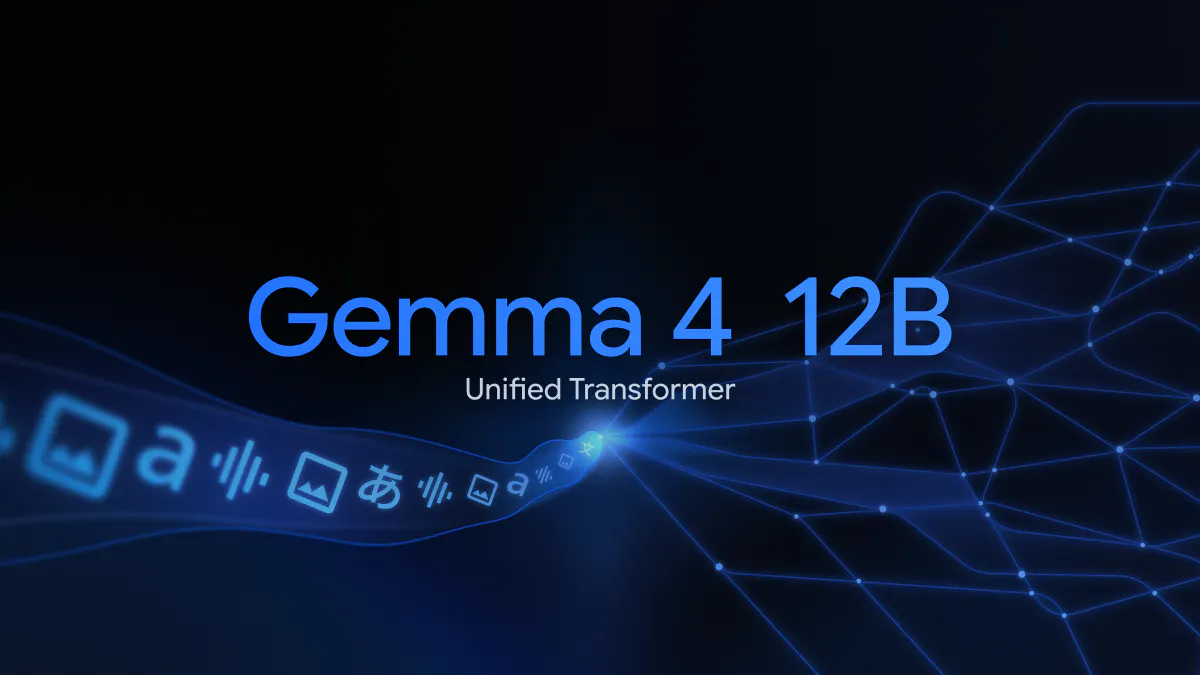
Run multimodal AI locally with an encoder-free architecture
About Google Gemma 4 12B
Reviews 5
-
Korbin Effertz 5 months ago
The only one local model that fits to my MBP (36gb ram) and can be used in IDE
-
Esteban Kilback 5 months ago
The 16GB requirement is probably the most interesting number here. It feels like we're getting closer to a point where indie developers can build genuinely useful multimodal products without depending on external APIs for every interaction. Excited to see what people build when privacy, offline access, and multimodal AI can coexist on consumer devices.
-
Duncan Effertz 5 months ago
I have been witing for something like this for quite a long time!
-
Jaiden Runolfsson 5 months ago
16GB VRAM for text, vision, and audio without separate encoders is a big deal for anyone building local AI tools. most multimodal setups eat half your memory just loading the encoder stack before you even start doing anything useful. curious how this compares to gemma 26B in real-world tasks though... benchmarks say "close" but close can mean very different things depending on what you're actually building with it
-
Ulises Ankunding 5 months ago
Encoder-free multimodal architecture is a bold call. Folding visual understanding directly into the transformer avoids the latency of separate encoder forward passes and reduces memory significantly. We've been wrestling with the privacy tradeoffs of calling external APIs for customer data, so local inference changes that calculus entirely. How does this affect LoRA fine-tuning? Can you still do efficient adapter-based approaches across both modalities?