

About Job Postings API
Reviews 12
-
Rahul Goyette 5 months ago
Had a look at this and it is super-impressive. Sent email for API key but haven’t heard — is email still the proper way to request API access?
-
Joshua Abshire 5 months ago
The historical data part caught my attention. Comparing hiring activity over time sounds almost as interesting as the job search use case itself. Nice launch
-
Alford Marvin 5 months ago
This looks really useful for market research especially tracking hiring trends by company or category over time. For active roles, how often are listings refreshed? I imagine freshness matters a lot if someone wants to build job search or alert workflow on top of it.
-
Esteban Kilback 5 months ago
Only the US? Will other countries be supported? And a second question: how up-to-date are the job listings? How often is the database updated? I need to track job postings by keywords and receive a list of vacancies for specific technologies immediately after they are published, ideally within 1 hour.
-
Murray Kuhlman 5 months ago
I would like to see this include a verification badge. Verified that the job is active, the company is real and even show how many active postings a company has, how many they post and repost
-
Lamont Strosin 5 months ago
怎么更新信息的时效性?
-
Randi Prohaska 5 months ago
This is like a Wayback Machine for job listings. Maybe a data analyst can use this to see the number of times a company posts the same job type in a given time period and gauge overall turnover rate.
-
Marcelo Prohaska 5 months ago
is it actually free to consume? I might have an use case for my portal, Obvelum
-
Fidel Davis 5 months ago
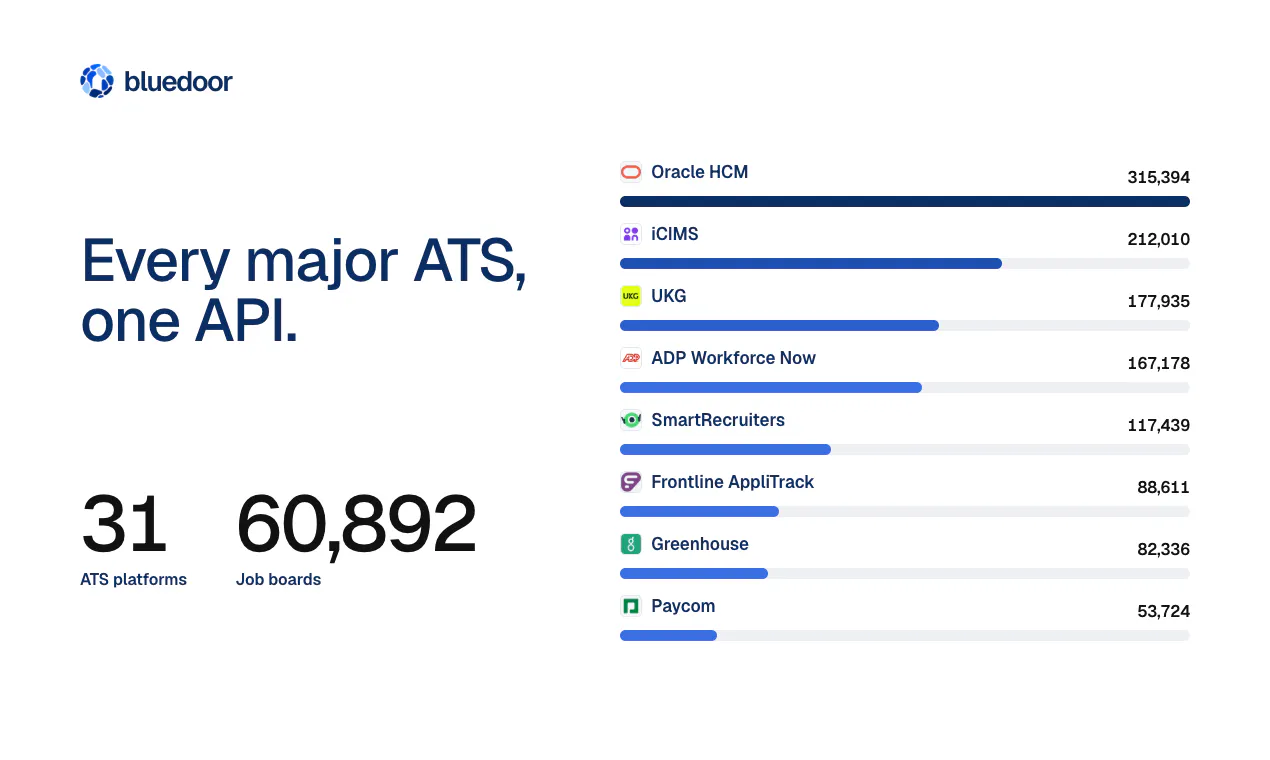
The normalization layer is where I'd want to understand the depth of work done. Thirty-plus ATSs means thirty-plus ways to express job title, seniority, and employment type — and raw aggregation without opinionated normalization just moves the cleanup problem to whoever's consuming the API. How standardized are fields like seniority level or work location across sources, or is that still left to the builder?
-
Jaiden Runolfsson 5 months ago
Historical job data is super useful for trend analysis. Do you expose fields like salary ranges and remote policy consistently, or is that only available when the ATS includes it?
-
Neal Jacobson 5 months ago
the use case i'd want to validate before building on this is freshness. job postings have a short shelf life and a listing that was active three days ago might already be filled or pulled. what does the update frequency look like across the 1.8M listings and is there a way to query only postings updated within a specific window so i'm not surfacing stale data to end users. that latency question is probably the thing that determines whether this works for real-time job search applications or only for market analysis
-
Esteban Kilback 5 months ago
Unified ATS access is the part people underestimate. Anyone who built a jobs-data side project knows you start scraping LinkedIn/Indeed and rebuild it monthly when something breaks. 30+ ATS in one schema removes the worst part of the stack. Free tier is a strong play for early devs.