

About LiveReview
Reviews 15
-
Conner Gislason 2 weeks ago
congrats on the launch!! quick question. our deploy cancels whatever is already running, so 2 low risk PRs merged back to back break the 1st one. neither diff looks dangerous on its own. does auto approve know whats already in flight, or is each PR scored alone? 👀
-
Felipe Sanford 2 weeks ago
looks awesome, excited to try it
-
Adam Zemlak 2 weeks ago
Congrats on the launch!. Very interest. I am curious how the blast radius is calculated. Based on no of files any PR touches, no of line changes? does it also understand the blast radius based on business/functional impact?
-
Gilbert Lind 2 weeks ago
If someone chops a high-risk change into a stack of small PRs that each look safe — a rename, then a helper, and the last one flips the flag — does the risk score see that whole stack and the branch history? Or does each one get scored on its own and come back looking harmless?
-
Rupert Emmerich 2 weeks ago
Congrats on the release! This looks really promising! 👍🎉
-
Hugh Borer 2 weeks ago
I'd definitely want to try this. We built our own review setup and are still improving it. I like that LiveReview promises production results, not more comments. Two things I keep running into. With everyone on our team running 10+ coding agents in parallel, the rebase, re-review, rebase loop burns a lot of time and tokens. And it's hard to give the reviewer enough context to see the whole architecture, not just the diff. @shrsv how does LiveReview handle these?
-
Carter Volkman 2 weeks ago
This is marvellous effort towards making review a religious practice for large organisation and the most important thing which I like the most is that user spend less time reviewing still focussing wider code level review. Loved git lrc back in days. Can't wait to try this. Congrats on launch!!!
-
Jarrell Homenick 2 weeks ago
Honestly, half the PRs I see barely need a review these days. This makes a lot of sense.
-
Jaylon Deckow 2 weeks ago
Interesting! So How does it work? Is it like a graphify kind of tool? that looks at blast radius and then does industry standard heuristic bench marks on what it finds etc? I assume no AI since its free and self hostable?
-
Mckenzie Mosciski 2 weeks ago
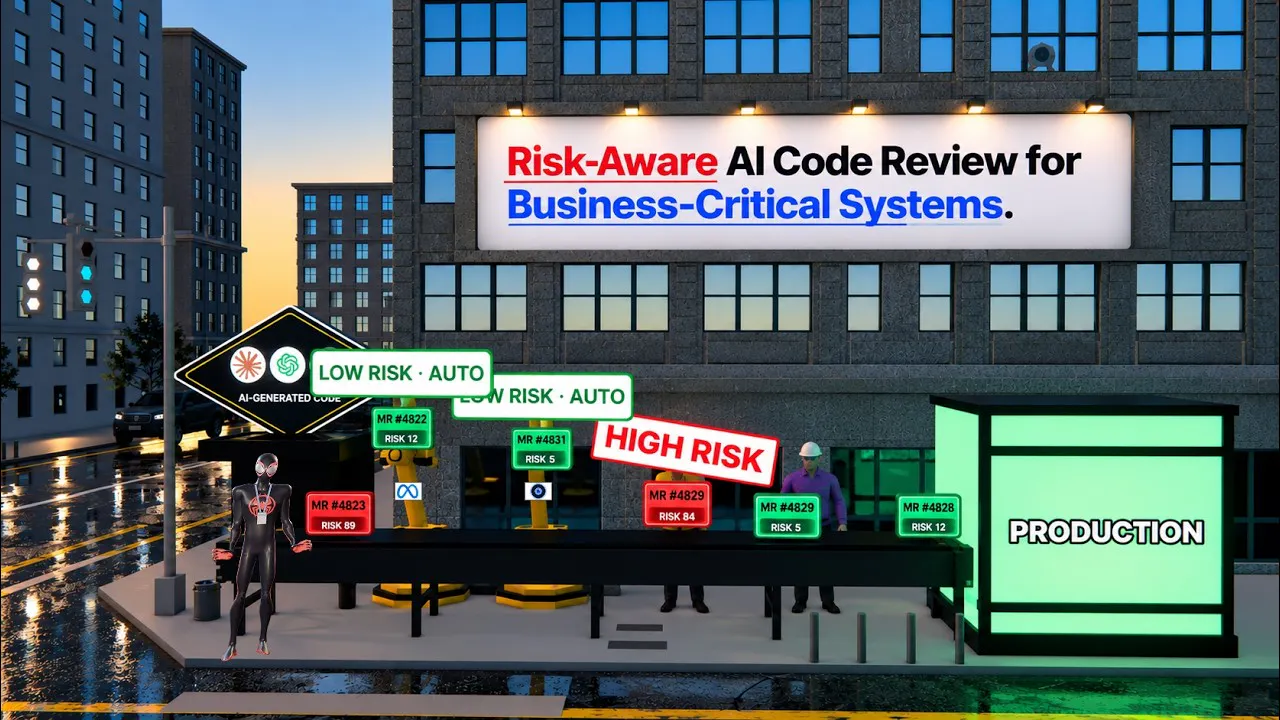
most review bots just spam nits on every pr and people stop reading them. risk scoring first feels like the right order. does the auto-approve play nice with branch protection or do you still need a human check to merge?
-
Al Wolf 2 weeks ago
Free and self-hostable with my own Claude key is the part that would actually get me to try it — I don't love routing my code through another hosted reviewer. As a solo dev, the Cognitive Coverage bit is what caught my eye: walking a PR as slides before merging is a nice answer to the 'AI wrote it, I skimmed it' problem.
-
Kyleigh Luettgen 2 weeks ago
auto-approving the low-risk PRs is the useful part. when it routes a riskier one, does the engineer see the risk score breakdown or just a flag?
-
Kyleigh Luettgen 2 weeks ago
Very nice, congrats on the launch!
-
Fidel Davis 2 weeks ago
Does anyone on your own team actually take the quiz before merging?
-
Sedrick Hirthe 2 weeks ago
Congrats on the launch. Can we customise some particular kind of diffs so that they go to the reviewer despite having lower risk score?