

About Memori
Reviews 12
-
Daren Bruen 5 months ago
Most memory tools I've tried feel like souped-up sticky notes — you're essentially just saving conversation snippets and hoping the right one surfaces later. What's different here is that the memory is structural, not textual. It knows WHY a decision was made, not just that it was made. My practical question: how does this behave when an agent makes a wrong decision and you want to correct it? Does a bad execution trace get weighted down over time, or does it stick around and keep influencing future behaviour?
-
Burley Collins 5 months ago
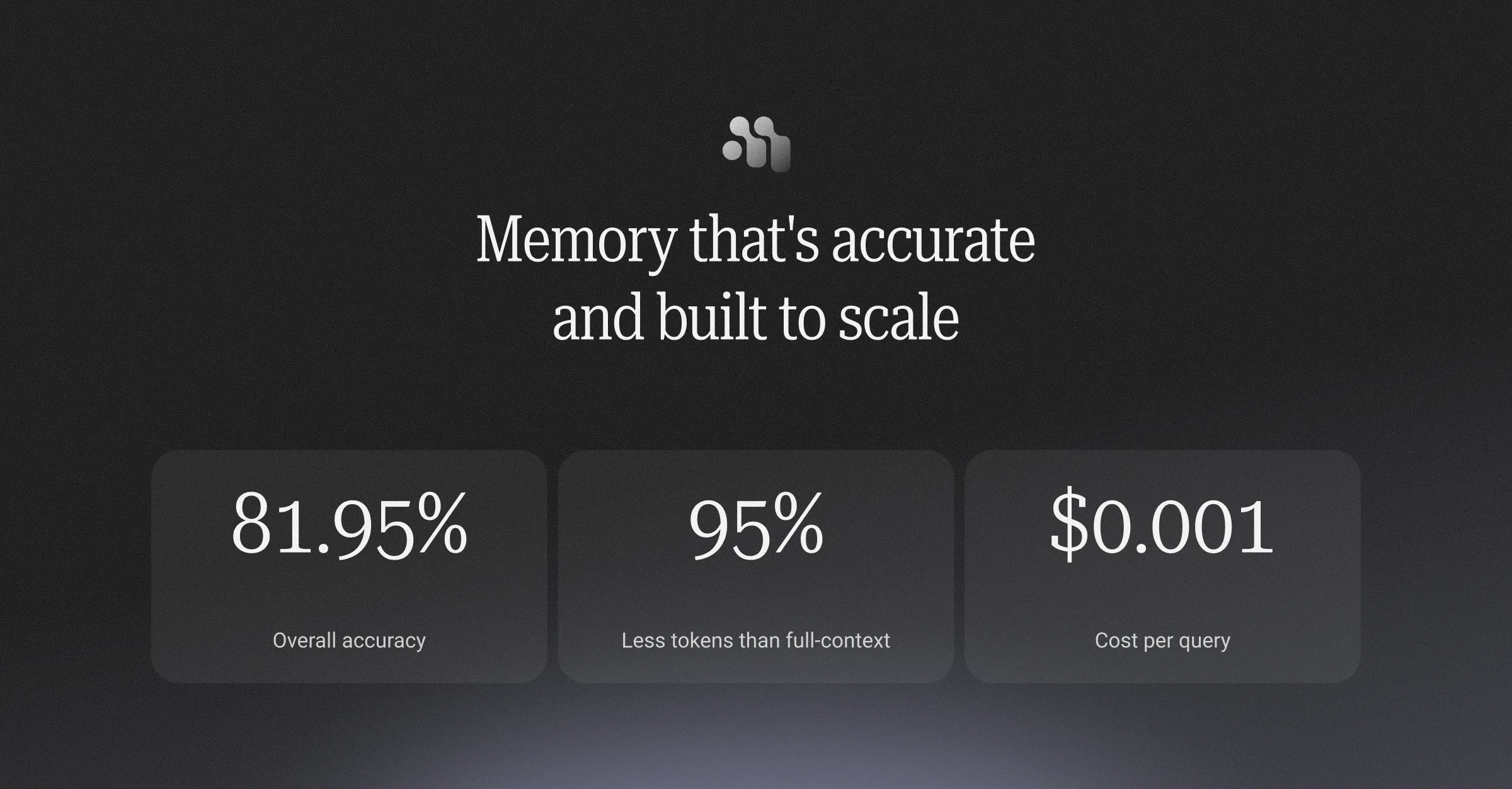
We built something similar at Tuple — agents that retained outcome data from past campaigns, not just conversation history. The behavioral difference was significant. An agent that recalls "this pain framing outperformed in healthcare verticals three campaigns ago" behaves fundamentally differently than one starting cold each run. The hard part we kept hitting: structuring trace data so retrieval stays signal-dense, not verbose. The LoCoMo benchmark showing 5% of context cost is the number that matters for production deployments. Watching this closely.
-
Rupert Emmerich 5 months ago
Persistent memory from trace (not conversation) is exactly the right framing — agents that 'forget' why they made a choice are nearly useless in any audit-sensitive workflow. Curious how Memori handles the case where two traces contradict each other and the agent needs to pick a winning version. This is structurally the same problem in financial modeling — I built ModeLoop in part because assumption drift between model versions is brutal in deal work, and 'why did we change this number' is the question that gets asked three months later when nobody remembers.
-
Johnathan Homenick 5 months ago
the trace-based approach is smart. most agent memory systems just store conversation turns, which loses all the decision logic and tool outputs that actually matter for improving performance over time. curious how you handle conflicting memories when the same agent runs different strategies on similar tasks?
-
Elias Rowe 5 months ago
Congrats on the launch!
-
Orrin Batz 5 months ago
Cool! Can you also store and remember the sequence of actions in a multi-agent system?
-
Elmer Schoen 5 months ago
We’ve been noticing that “memory” for agents usually breaks once workflows become long-running or tool-heavy. The agent trace angle here is interesting because conversation history alone definitely isn’t enough anymore. How are you guys handling memory cleanup / forgetting over time?
-
Kenneth Corwin 5 months ago
The trace-based memory model is architecturally clever. Capturing tool calls, decisions, and outcomes from execution rather than compressing conversation history preserves the why behind agent behavior, not just the what. We've hit this ceiling building stateful agent workflows; chat summaries lose causal context fast. How do you handle storage and retrieval at scale when agent runs produce deeply nested execution graphs?
-
Daren Bruen 5 months ago
This is the right direction for agent memory. I like that you're deriving it from traces and tool outcomes instead of only chat history. The real test I'd be curious about is how teams inspect and prune memories when workflows change.
-
Rupert Emmerich 5 months ago
How does Memori handle memory updates when the agent learns something new that contradicts an older trace?
-
Rylan Hyatt 5 months ago
The "memory from execution trace, not just conversation" framing is exactly the right primitive for agents that actually do things vs just talk. Quick question: when a tool call returns a large blob (say a 10MB SQL result), how does Memori decide what to keep in long-term memory vs discard? Curious about the pruning side.
-
Felipe Sanford 5 months ago
The memory layer design is genuinely artistic. Instead of treating memory as compressed chat history, @Memori turns agent execution traces into reusable state: what tools were called, what worked, what failed, what decisions were made, and what patterns should carry forward. That is a much stronger memory primitive for agents. Real agent context lives in the execution path, not just in the conversation around it. Kudos to @_gordee @adam_b_struck @memorilabs and the team! 15K GitHub stars and rising — well deserved!