

About Radar
Reviews 7
-
Adam Zemlak 6 months ago
Real screenshots, real product is a great line. Took it as a challenge. Cloned the repo, pointed my Cursor agent at it, and made 3 narrated demo videos using NarrateAI DemoMaker. No screen recording, no voiceover, no script writing. The agent just figured it out. Topology was obvious, your Reddit comments are basically a topology fan club so I followed the crowd. But Image Filesystem genuinely surprised me. I had no idea that feature existed until I went digging. Browsing a container image without kubectl exec or docker pull is not something I expected to find. That one deserves way more attention than it gets. Happy to share all three if useful. Great launch.
-
Jedidiah Farrell 6 months ago
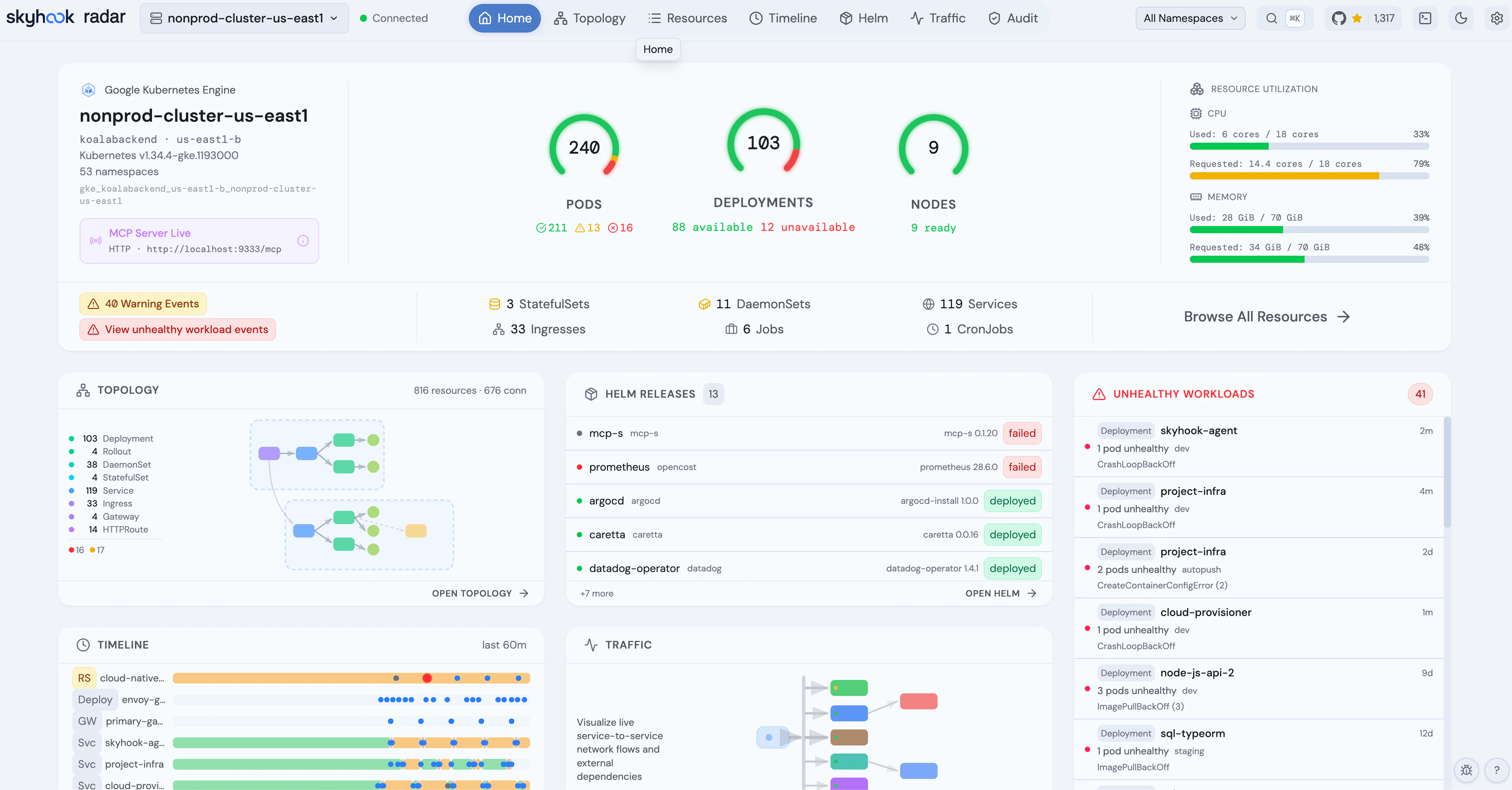
The MCP-for-AI-agents piece is the most interesting bit and the existing comments haven't poked at it. What can an agent actually do via Radar's MCP — read-only stuff (describe pods, fetch events, summarise an outage), or destructive ops (kubectl delete, rollout restart)? That boundary decides whether anyone runs this against a prod cluster.
-
Hobart Glover 6 months ago
Looks very useful, sharing it with my team
-
Ruben McClure 6 months ago
Was actually just looking for sth like this. Was about to build an internal shoddy version, this will do!
-
Makenna Eichmann 6 months ago
nice - gave it a star! good luck!
-
Jaylon Deckow 6 months ago
Local-first with zero cluster-side installation is the right call. When I was scaling an engineering org from 15 to 120, the biggest friction with K8s tooling was always the chicken-and-egg problem: you need cluster access to install the tool that helps you understand the cluster. Having this run as a single binary using existing kubeconfig means any engineer can get visibility without needing platform team approval first. That alone probably saves a week of onboarding time per new infrastructure hire.
-
Zachariah Hudson 6 months ago
a cluster audit with 31 checks across security and reliability is a massive value-add for day-to-day ops. we usually run separate trivy or kyverno reports, so having that integrated into the primary ui workflow is a huge time-saver. does the audit allow for custom check injection? @nadav_erell