

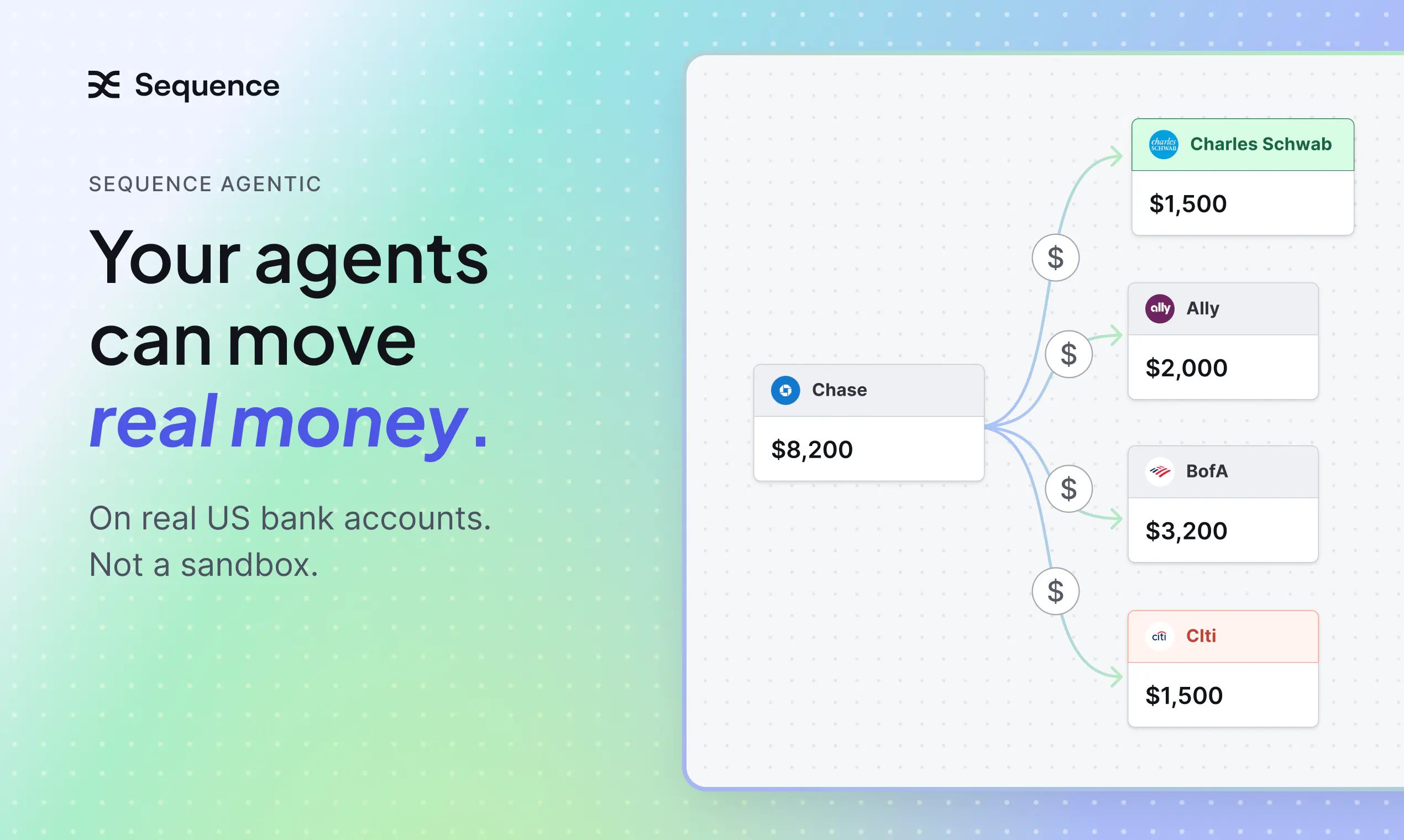
About Sequence Agentic
Reviews 15
-
Mike VonRueden 4 months ago
@Sequence Enforcing independent, server-side guardrails that the agent cannot see or modify is the exact right design pattern for financial agents. However, when an agent executes a live ACH or wire request and the network drops mid-transit, agents tend to hallucinate their execution state and aggressively retry the loop. How does Sequence natively handle transaction idempotency keys? Does the platform filter out duplicate agent retries deterministically on your backend, or does the agent have to provide its own state logging?
-
Gaylord Buckridge 4 months ago
money movement is the real unlock for agents 💸 scoped keys + server side limits is the smart bit. congrats!
-
Randi Prohaska 4 months ago
Putting the spend limits in the key server-side instead of in the prompt is the right call — the scoped-key answer above is the only thing that actually holds when an agent's reasoning goes sideways. The operator edge case I'd want pinned before wiring an agent to live money is retries: if an agent fires a transfer, times out, then retries, is there an idempotency key so it doesn't double-send? And for an in-limit but wrong transfer, is there any reversal/clawback window, or is it final on execution?
-
Rylan Hyatt 4 months ago
how does the auth model actually work in practice, like can my agent move money between two banks I own without me re-approving each transfer or is there a manual confirm step every time?
-
Roy Kris 4 months ago
finally a way to stop babysitting my bots every time they touch a card. the scoped keys and audit trail actually feel like they were built by someone who got burned before.
-
Ruben McClure 4 months ago
The scoped keys and server-side limits make this feel more realistic than asking an agent to please behave around money. Approved invoice payments, vendor reimbursements, and tax-bucket transfers seem like narrow first use cases where audit trails can stay clean. Which workflow are you seeing customers most comfortable handing to an agent first?
-
Esteban Kilback 4 months ago
finally got my cursor agent to actually move money between accounts, the scoped keys and spending limits make it feel way safer than i expected
-
Wiley Lubowitz 4 months ago
Scoping each API key to specific accounts and limits feels like the right move for letting agents touch real money, and the audit trail is a nice touch. Honestly impressed it just plugged into my n8n flow with no fuss.
-
Roberto Smith 4 months ago
Finally got tired of copy pasting routing numbers and this just handled it from my agent in seconds. Scoped keys feel genuinely safe compared to the screen scraping hacks I've been patching together.
-
Zachariah Hudson 4 months ago
Finally got my agent to split rent across three cards without me babysitting it. The audit trail alone sold me on trusting it with anything beyond pocket money.
-
Derick Koelpin 4 months ago
How does the audit trail handle things like partial failures when a split payment has 4 legs and leg 3 fails halfway through?
-
Godfrey Donnelly 4 months ago
How does scoped key isolation actually work when an agent needs to move funds between two of my accounts that share a login, do you set up separate sessions per task or is it one persistent auth context with per-call limits layered on top?
-
Felipe Sanford 4 months ago
How does Sequence actually handle the authentication piece when connecting to things like my Chase account or a credit card API, since most banks don't just hand out clean OAuth endpoints for agent access?
-
Chelsey Gottlieb 4 months ago
Finally a way to let my agents move money without me watching over their shoulder. Set a per-key limit in three minutes and watched Claude split a transfer across accounts exactly as I asked.
-
Hillard Halvorson 4 months ago
How does Sequence actually handle compliance when an AI agent triggers a transaction that triggers a bank's fraud detection or velocity limits on its own?