

About Sonarly
Reviews 15
-
Al Wolf 8 months ago
Congrats on the launch. The gap between monitoring and fixing is so obvious in hindsight and yet nobody solved it before you. The reason is that most tools are built by people who have never had to triage an alert avalanche at 2am with five Sentry notifications saying different things about the same broken thing. The Claude Code + Opus 4.6 stack with full production context is the right call for this but I'm curious: how does Sonarly handle the lateral movement risk when the agent has simultaneous access to codebase, logs, metrics AND traces? That's a wide blast radius if something goes sideways in the fix logic. Is the repo access scoped per-triage session or persistent?
-
Toni Kutch 8 months ago
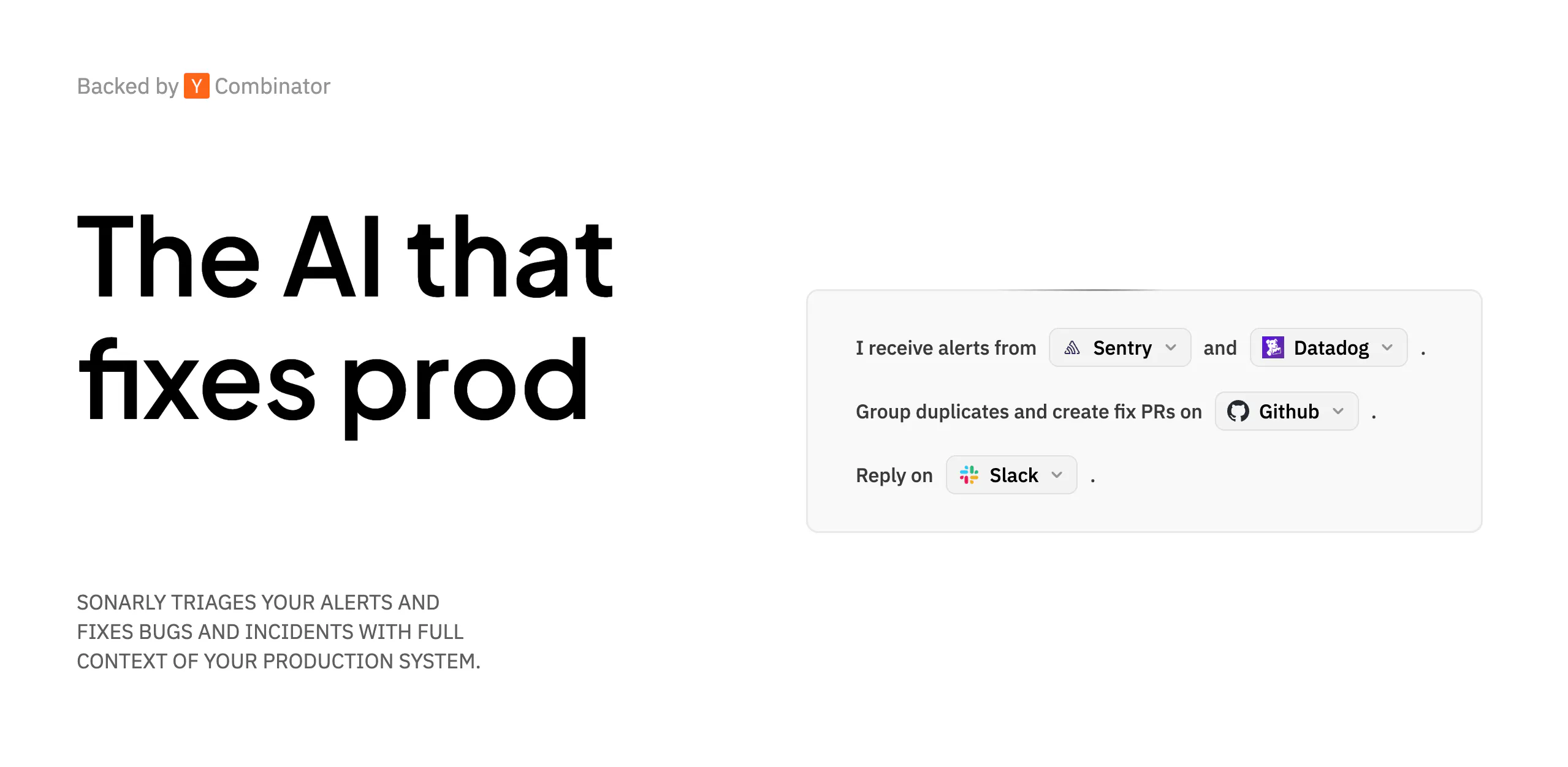
The alert deduplication that groups Sentry and Datadog noise by shared root cause is the part that actually changes on-call life... most engineers aren't drowning in real incidents, they're drowning in duplicate alerts for the same one. The fact that Sonarly returns a production-aware PR with evidence rather than just a diagnosis closes the loop properly. Curious how it handles incidents that span multiple services with separate owners... does it route the PR to the right team automatically?
-
Conner Gislason 8 months ago
that video is insane, where did you make it
-
Godfrey Donnelly 8 months ago
Interesting architecture here. From the description it feels like Sonarly behaves closer to an autonomous incident-response layer rather than just a typical monitoring or debugging tool. Curious how the team internally thinks about that distinction.
-
Felipe Sanford 8 months ago
Met the team, they are sooo good! Shared with all the CTOs in my Network
-
Chelsey Gottlieb 8 months ago
Huge fan of this product it will change the way people do monitoring!
-
Rocio Cormier 8 months ago
Well done team!
-
Rocio Cormier 8 months ago
Curious how you handle the cases where the AI-generated PR fixes the symptom but not the root cause — that seems like the failure mode that would erode trust the fastest. The monitoring + auto-fix loop is interesting but it requires a lot of trust in the system, and most eng teams I know are still pretty cautious about auto-merging anything. What does the human review step actually look like in practice?
-
Jedidiah Farrell 8 months ago
The "evidence to ensure nothing is hallucinated" framing is doing a lot of work in your pitch. What does that actually look like in the PR? Are we talking linked log lines, specific stack traces, a confidence score on the root cause?
-
Demetrius Gulgowski 8 months ago
Sounds useful. Happy to support! :)
-
Franz Bauch 8 months ago
amazing product and team!
-
Elias Rowe 8 months ago
How's the false positive rate on PRs?
-
Enrico Wiza 8 months ago
Our team is very excited for this product, great work!
-
Elias Rowe 8 months ago
Really cool that you're using Claude Code under the hood for this. The alert deduplication alone sounds like it would save a ton of time. Most teams I know just drown in Sentry noise and end up ignoring half of it. One thing that pairs well with backend monitoring like this is collecting bug reports from actual users too. Something like Blocfeed lets users click on the broken element and submit reports with full context (CSS selectors, console errors, browser info). Helps you catch the stuff that monitoring tools miss because users experience things differently. Congrats on the YC launch! How does it handle false positives? Like if Sentry fires an alert that's not actually a real issue, does Sonarly still try to "fix" it?
-
Charley Swift 8 months ago
Been using @Sonarly for a while and big fan. Really helps to cut through all the emails I get from Sentry. Spending much less time on alerts and fixes now. Thanks for building this @dimittri @alexandre_k_