

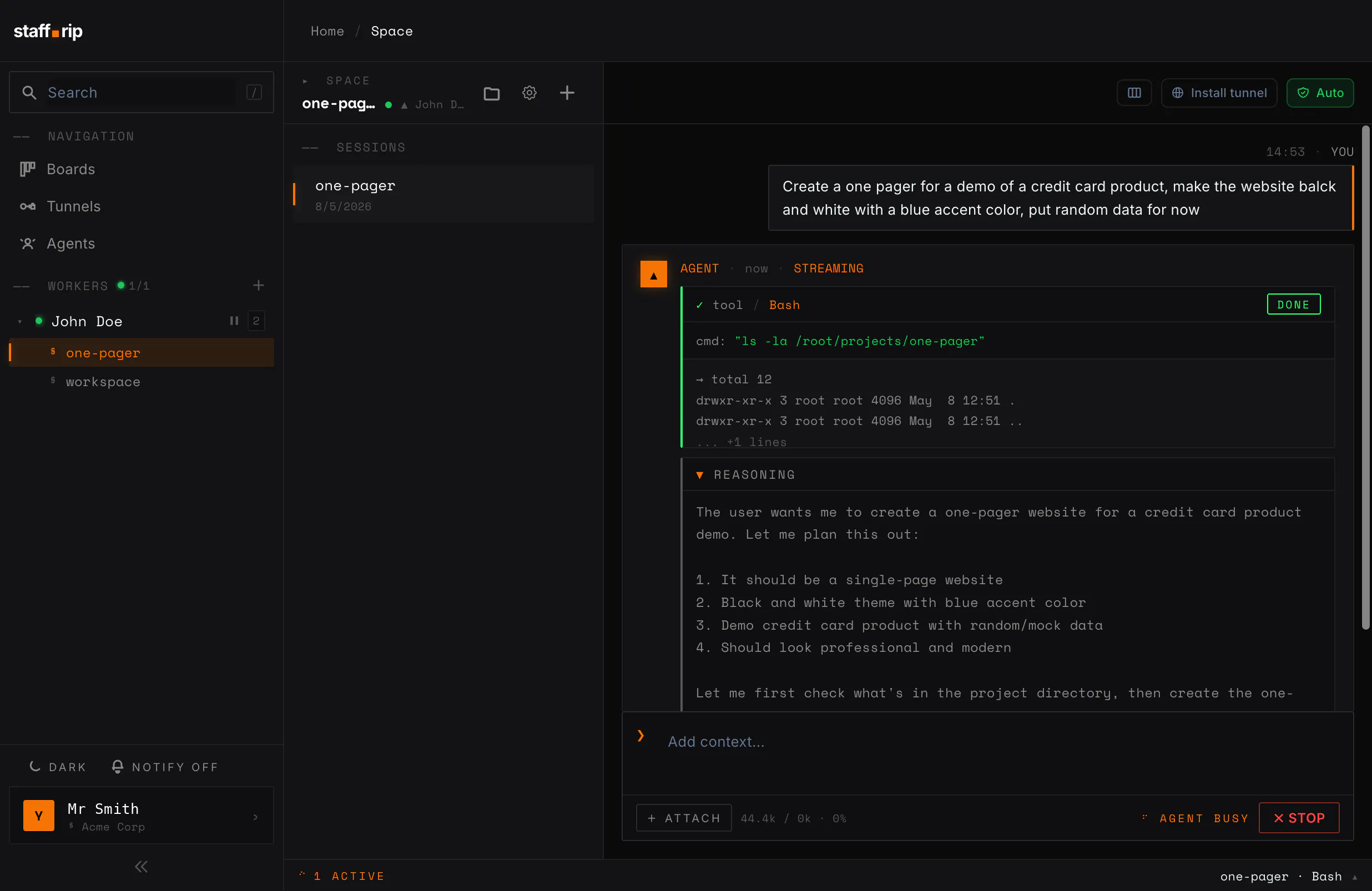
About Staff.rip
Reviews 10
-
Johnpaul Crona 5 months ago
The provenance point feels bigger than a nice-to-have. Once non-engineers can initiate changes, teams need a compact audit trail of intent -> plan -> diff -> reviewer decision, otherwise every bug turns into archaeology. Even a lightweight record on the PR or deployment review page would go a long way: initial request, agent summary of what it thought the request meant, key tool actions, and the final reviewer decision. That seems like the piece that turns "plain language to shipped code" from a clever demo into something teams can trust at scale.
-
Godfrey Donnelly 6 months ago
Worked on a team project once where the codebase was divided across people and anytime a change touched someone else’s part, everything would grind to a halt until that person was available. Even really small things would suddenly become blockers because only one person properly understood that section of the stack. That’s honestly the part of Staff.rip that stood out to me most. The idea of interacting with larger codebases through plain language instead of needing deep familiarity with every service/component feels genuinely useful once projects start getting fragmented across teams. The self-hosted angle matters too since most teams realistically are not going to send a production codebase to a third-party cloud. One thing I’m curious about though, as the codebase grows and changes over time, does Staff.rip maintain some persistent understanding of the project architecture across sessions or does each session mostly start fresh?
-
Kyleigh Luettgen 6 months ago
The idea of letting non-technical clients bypass Git and the CLI to push changes via natural language is honestly terrifying. Running the agent locally to protect the codebase is a smart architectural choice, but I'm highly skeptical of how this prevents a vague prompt from accidentally wiping a table or introducing massive regressions across microservices. How robust is the sandbox isolation when giving non-devs direct execution rights?
-
Jake Blanda 6 months ago
The “plain language to code change” idea is strong, especially if non-engineering team members can interact with a dev environment safely. My main question is around traceability: when the agent makes a change, is there a clear audit trail showing the original prompt, files changed, validation steps, and rollback path?
-
Lamont Strosin 6 months ago
The sandboxed self-hosted approach solves the real enterprise blocker — most code agents running in the cloud are a non-starter for production codebases. What I'm most curious about is conflict resolution: when the plain language description is ambiguous across services, does the agent pause and ask or make a judgment call and log it for review?
-
Nikunj 6 months ago
"Interesting approach to governed agentic code changes — describing a change in plain English and having the agent plan + ship it removes a huge amount of back-and-forth. Curious how it handles ambiguous instructions where the intent could be interpreted multiple ways. Does it ask for clarification before executing, or does it make a best guess and let you review the diff?"
-
Roberto Smith 6 months ago
Interesting that it prioritizes self-hosted governance over raw autonomy. Curious how it handles rollback when an agent-initiated change breaks a downstream dependency — that's the hard part nobody talks about.
-
Johnathan Homenick 6 months ago
Giving the capability to ship to a broader audience, the way to empower codebases with the strength of the community 🔥 I love it, congrats for the launch !! 🚀
-
Hugh Borer 6 months ago
How does staff.rip prevent AI-generated changes from silently breaking production systems, especially across infra + backend + frontend in the same workflow? Additionally, You mention “no Git, no CLI”. what does collaboration and rollback look like when something goes wrong?
-
Toni Kutch 6 months ago
the "plain language to shipped code" framing is the wedge for ai-assisted shipping. one curious thing — when staff.rip ships a change, does the PR carry a trace of the prompt that produced it? becomes useful when you want to replay what the agent was asked vs what it did.