

WIT
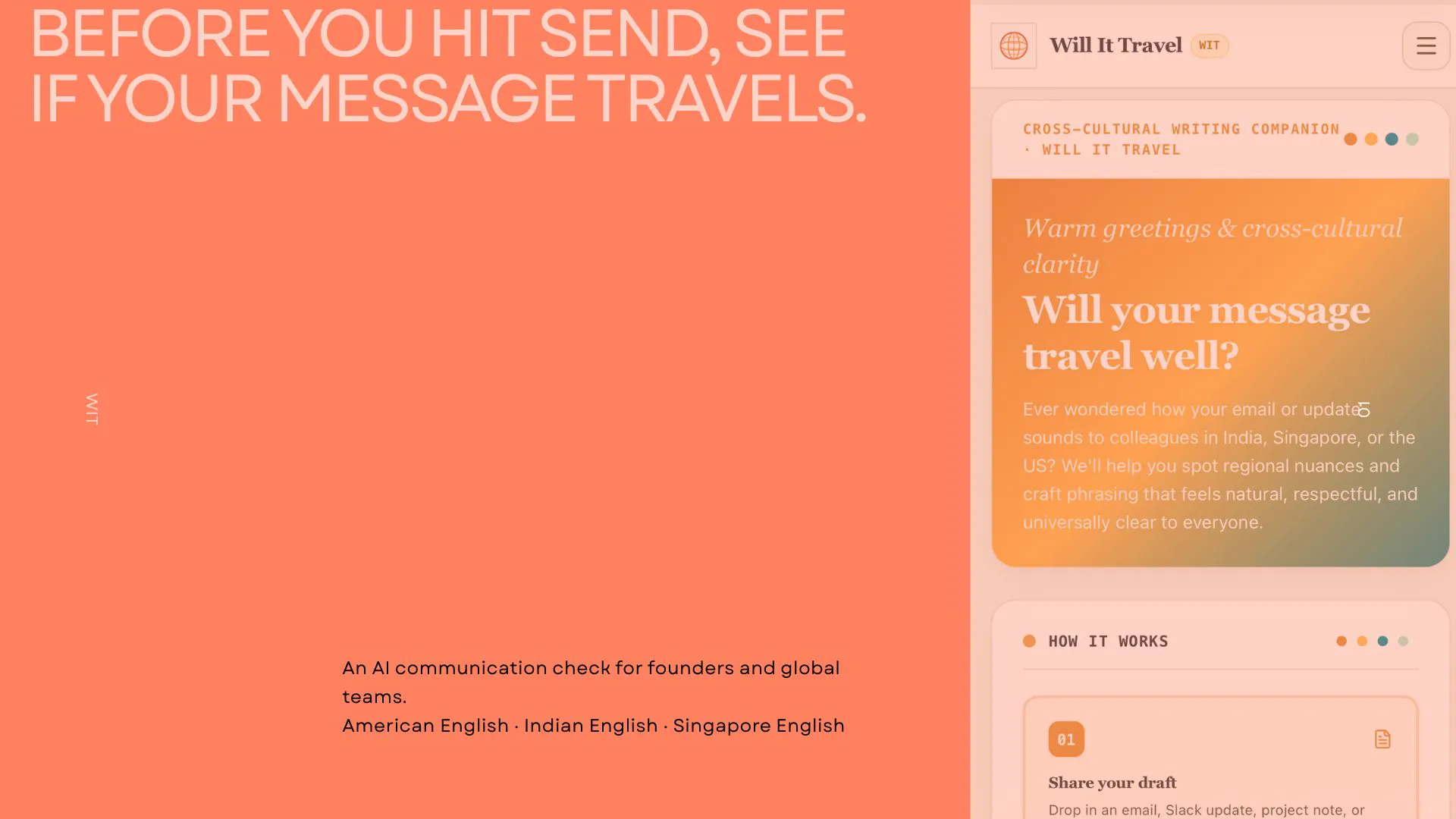
Spot potential misunderstandings across global Englishes
About WIT
Reviews 6
-
Malachi Armstrong 2 months ago
@maria_telegina Congrats on the launch! Very interesting idea, because communication is a key to success and soo important to take into account other cultural backgrounds!
-
Karley Frami 2 months ago
Interesting idea. Currently testing it and would like to see more languages :)
-
Trenton Spencer 2 months ago
My copy goes out to a dozen countries at once, and I only spot the confusing line when someone asks what I meant. Which phrase trips people up most?
-
Randi Prohaska 2 months ago
the use case i'd want is the reverse direction - pasting a message someone else sent me that landed weird, to check if it's actually a tone mismatch across Englishes or if i'm just reading into it. is that a use case you've thought about, or is it strictly for checking your own outgoing message before you hit send
-
Jackson Fisher 2 months ago
Not auto-replacing is the right call. Most tools go straight to the rewrite and you lose any way to argue with it. The thing I'd watch is false positives, because if it flags a sentence that was actually fine, people stop reading the flags inside a week and you never hear about it. Nobody files a bug for a tool they've quietly started ignoring. Three Englishes is a curious cut too, British was the one I expected to see first.
-
Neal Jacobson 2 months ago
Hi! Communication in international spaces can be hard, and can lead to a lot of misunderstandings among colleagues. That's where WIT comes in, send your possibly unclear message and see how it might be interpreted by other English speakers. Meet WIT — Will It Travel? WIT is a language risk audit tool that explores how a message might be interpreted across different varieties of English. For our first version, we’re looking at American, Indian, and Singapore English. The goal isn’t to decide which version of English is “correct.” Instead, WIT helps make potential differences in interpretation visible, things like wording, tone, or phrases that might make sense to one audience but create confusion for another. This idea is especially meaningful to me because I’ve experienced those misunderstandings myself when communicating with international friends and collaborators. Sometimes a message can seem completely clear to you and still land very differently for someone else. We’re excited to be launching today on Product Hunt, it has been a wonderful journey so far! What’s a phrase or message you’ve sent that you later realized could have been interpreted completely differently?