

About Codex Subagents
Reviews 8
-
Joany Hansen 7 months ago
When subagents run in parallel on the same codebase, how do you handle the merge problem? If agent A refactors a module while agent B adds new functionality that depends on it, does the orchestration layer catch the conflict before integration or does it surface as a failed merge? Wondering if there's a built-in dependency resolution step or whether that's still left to the user to coordinate.
-
Hazel Altenwerth 8 months ago
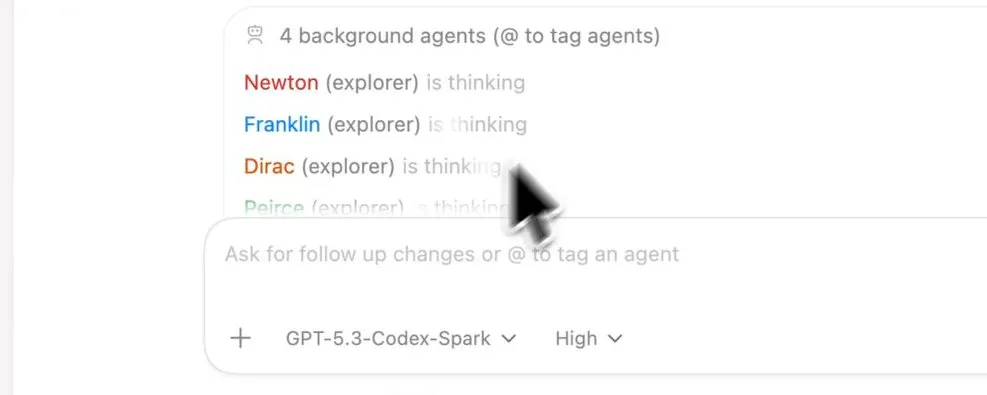
Really interesting direction. What stands out here is that this feels like more than just “parallel agents” as a feature. Once the main agent starts spawning specialized workers, routing tasks, waiting on results, and consolidating outputs, the system begins to behave less like a single coding assistant and more like a coordination runtime for agent teams. That feels like an important shift. The value is no longer just better execution inside one context window, but structured delegation across multiple cognitive threads without everything collapsing into context rot. Curious how you think about this long term. Do you see subagents remaining a productivity feature inside Codex, or becoming a more foundational coordination layer for multi-agent software workflows?
-
Esteban Kilback 8 months ago
I use Cursor,Cluade Code, Codex at the same time. Normally, I can tell to spin out 3/5 agents to solve GitHub issues within Cursor and Claude Code. Codex can open 3/5 threads to parallel work but doesn't automatically spin out subagents. Will try today.
-
Garnet Stokes 8 months ago
Gonna try this out. Codex 5.4 is already awesome and this seems like a way to supercharge it.
-
Franz Bauch 8 months ago
So how do plugins like compound engineering work going forward?
-
Kay Balistreri 8 months ago
This is very cool
-
Jackson Fisher 8 months ago
The concept looks solid. What was the hardest part of building it?
-
Daren Bruen 8 months ago
Spawning specialized parallel agents for complex coding tasks is the right evolution for Codex — splitting a large problem into concurrent subagents that each handle a focused piece mirrors how experienced engineering teams actually decompose work, and doing it in parallel rather than sequentially should dramatically cut time-to-completion on multi-file refactors and complex feature builds. How do subagents coordinate when their changes overlap — is there a central orchestrator that detects conflicting edits across parallel workers, or do they operate on isolated branches that get merged at the end?